
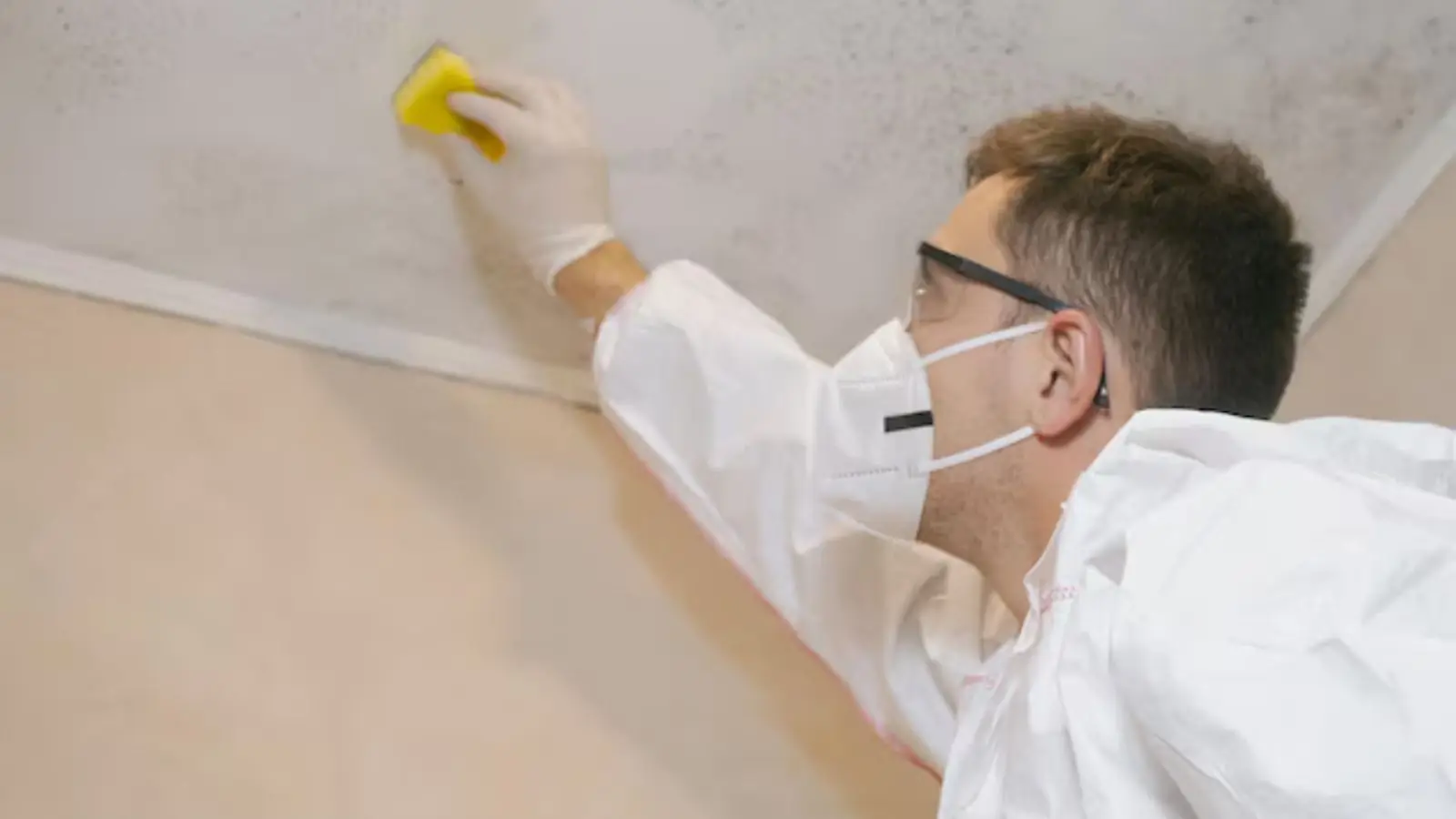
Black spots on shower caulk, grout or the ceiling above the tub are common, and most are surface growth fed by steam and splashes. A homeowner in La Palma, CA can usually handle a small patch safely. The harder question is whether the shower is only damp or actually leaking behind the wall.
This guide covers cleaning small areas, signs of a hidden leak and the point where a crew should take over. Color does not tell you what kind of mold it is, so treat black growth the same way you would treat any mold.
Why showers grow mold
Mold needs moisture, a food source and time. A shower supplies all three: soap residue, skin oils, damp caulk and a closed bathroom with weak ventilation. A fan that is undersized or vented into the attic keeps the air wet long after the shower ends.
Check that the exhaust fan actually moves air by holding a tissue to the grille. Run it during every shower and for a while after.
Mold also favors the tub-wall joint, where caulk shrinks and lets water in. Press a dry fingertip along it and see whether the bead has pulled away.
Older fans can be loud and weak, so people stop using them. Replacing a worn fan with a quieter, properly ducted unit often solves the real cause.
Cleaning a small patch
For a small area, EPA guidance supports cleaning by the homeowner. Wear gloves, eye protection and an N95 respirator, and keep the fan running. Scrub hard surfaces such as tile and glass with detergent and water, rinse and dry fully.
Do not use bleach as the fix, and never mix cleaners. Remove and replace silicone caulk that is stained through, since mold roots into it.
Open a window if the bathroom has one, and keep the door closed so spores do not drift into hallways.
Let the area dry before you recaulk, and use a mildew-resistant silicone made for wet rooms.
Signs the problem is behind the wall
Surface growth wipes off. Hidden moisture shows up in other ways.
- Grout or caulk that turns black again within days.
- Soft, spongy or bulging drywall outside the shower wall.
- Loose or hollow-sounding tiles.
- Staining on the ceiling of the room below or on the other side of the wall.
- A musty smell that stays after cleaning.
- A damp feel at the baseboard or a rising water bill with no explanation.
Habits that limit repeat growth
Squeegee the walls and glass after each shower, hang towels to dry outside the shower and wash shower curtains or liners regularly. Replace a torn liner rather than cleaning it again and again. Keep the door open for a while after use so humid air can leave.
Check that the exhaust duct is connected and vents outdoors, not into the attic. A fan with a timer or humidity sensor helps if you often forget. No habit promises the growth will never return, but these steps remove most of what it needs. Check the fan duct again after a few months.
Where leaks start
| Likely source | What it looks like | Next step |
|---|---|---|
| Failed caulk or grout | Dark lines at corners and the tub edge | Remove, dry and recaulk |
| Cracked or loose tile | Hollow sound, water at the edge | Have the tile and substrate inspected |
| Leaking valve or shower pan | Stains below or on the adjoining wall | Call a plumber and have moisture readings taken |
| Poor ventilation | Mold on the ceiling and upper walls | Fix the fan and ducting |
A moisture meter and a thermal imaging camera can find wet drywall without cutting into it.
When to stop and call
Stop if the growth covers more than about 10 square feet, returns after cleaning or sits on soft drywall. A pro will set up containment, run a HEPA air scrubber and remove porous materials under ANSI/IICRC S520, the published standard for mold remediation. See our mold remediation page for the stages.
Health questions belong with a physician, and independent clearance testing is available if you want a third-party result afterward. Ask before disturbing old tile backer, old flooring or ceiling texture, since older materials can contain asbestos or lead.
Mention any musty smell in the adjoining rooms, since that can show moisture inside the wall.
Take photos and moisture readings before and after so you can see whether the fix worked.
If water has already spread
A shower that leaked into a wall or floor may need drying before any rebuild. EPA guidance says damp materials dried within 24 to 48 hours generally will not grow mold, so quick action helps. Our emergency water removal page explains what to do when water is actively spreading.
Turn off the supply to the shower if it is leaking. Keep power off to any outlet near wet walls.
Ask the crew to take readings on both sides of the wall, not only inside the shower. A thermal imaging camera helps show where moisture travelled.
La Palma notes on water and your bill
In La Palma, water comes from the City of La Palma's water utility, run through Public Works and Community Services. Golden State Water also serves portions of the city. Supply is imported water from the Metropolitan Water District plus groundwater from the Orange County Water District.
That means you should check a water bill to know which provider to call. If you suspect a leak in the shower valve or supply line, compare recent bills and look at the meter with every fixture off. A spinning meter points to a leak, and the right utility can explain readings and meter access.
Ask your water provider for its water quality report if you notice scale on fixtures. Homeowners in Cypress and Buena Park have their own providers, so the same bill check applies there. Record bill dates and readings for your plumber.
Common questions
Is black mold in a shower always dangerous?
Color does not identify the type of mold. Treat any growth the same way, with protective gear and moisture control. Health questions belong with a physician.
Can I remove mold from grout myself?
Small patches usually can be cleaned with detergent and water, then dried completely. Deep staining may need regrouting or replacement. Stop and get a moisture reading if the wall behind the tile feels soft or the tile moves.
How do I keep it from coming back?
Control moisture. Run the fan, wipe down the walls and replace failed caulk. No step can promise it will never return, so keep checking corners and the ceiling for damp spots every few weeks.
In La Palma, who do I call if I think the shower leak is on the supply side?
Check your water bill to see whether the City of La Palma or Golden State Water serves your address. Then ask that utility about the meter and your usage. Your plumber handles pipes inside the house.
Still have a question about your situation? Call (714) 515-1308 and a dispatcher will talk it through, day or night.