
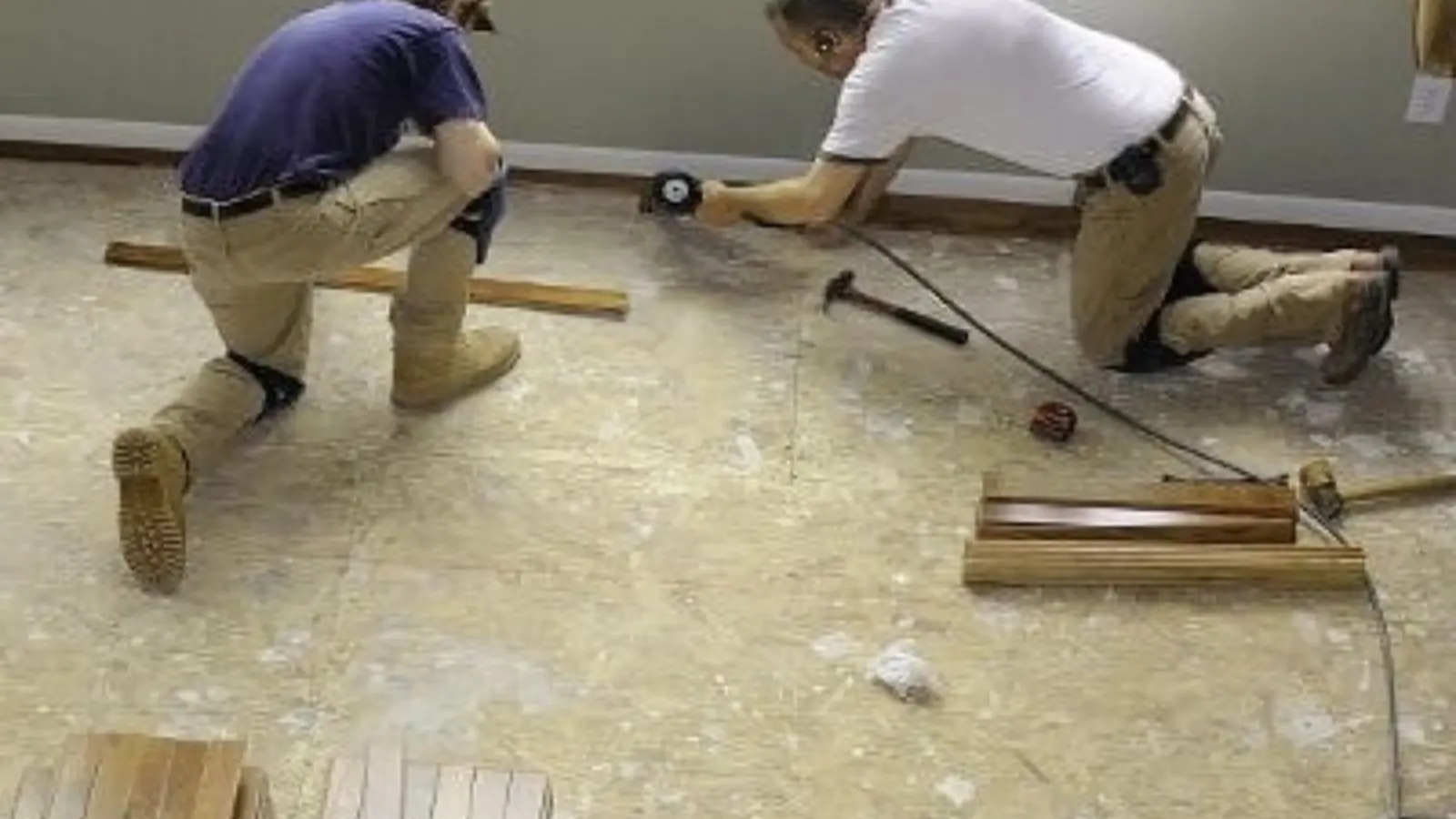
Water damage repair in La Palma, CA starts after the structure is dry
Water damage repair is the rebuild. It replaces drywall, insulation, flooring and finishes that cannot be saved, then paints and trims the room back to how it looked before the leak.
It is a different job from water mitigation, which stops the damage and dries the structure, and from water damage cleanup, which removes debris and sanitizes. Repair only makes sense once moisture readings confirm the framing and subfloor are dry. Rebuilding over a damp wall is how mold ends up behind new paint.
What water actually damages, and the order it fails
Most repair scopes follow the same ladder. Drywall and ceiling board go first because paper facing and gypsum absorb water quickly. Insulation and carpet pad come next, followed by flooring and finally framing, which is the hardest to hurt.
Drywall and ceilings
Staining, sagging, bubbling paint and soft spots mean the board has taken on water. Board that stayed wet long enough usually gets cut out rather than patched.
Insulation
Wet batt insulation loses its value and holds moisture against framing. It is normally removed and replaced once the cavity is dry.
Flooring and subfloor
Laminate and engineered wood swell at the seams. Hardwood cups. Carpet pad is usually discarded even when the carpet itself is dried.
Trim, cabinets and paint
Baseboards wick water upward. Cabinet bases swell. Paint and texture are matched last, after everything under them is sound.
What La Palma homes bring to a repair
La Palma incorporated in 1955 as Dairyland, so the housing stock spans several building eras. The year your home was built tells a repair crew what is behind the wall, from original plaster lath to later drywall, and which finishes need extra caution.
Ask before disturbing old ceiling texture or old flooring in an older house, because some mid-century materials contained asbestos and some old paint contained lead. A lab test is cheap compared with spreading either through the home. Permit rules vary, so ask the Community Development department at City Hall on Walker Street whether your scope needs one.
Ceiling and wall water damage repair, and when to call
A ceiling stain is a symptom, not the damage. The source is above it: a roof leak, a supply line, a drain or a condensation line. The first step is finding and stopping that source, then checking the cavity with a moisture meter and a thermal imaging camera.
If the board is firm and dry, a stain-blocking primer and fresh paint can finish the job. If it sags, crumbles or stays damp, the damaged section is cut back to the nearest framing, wet insulation comes out, the cavity dries, and new board is hung, taped, textured and painted. Walls follow the same sequence, with extra attention to the bottom 12 inches where water wicks upward.
If the area is still wet, the drying process is the right first call, and repair comes after.
- Find and stop the source before any repair is scheduled
- Map moisture in the board, insulation and framing
- Remove only what cannot be dried
- Dry the cavity to the target reading before closing it
- Tape, texture, prime and paint to match
Hardwood floors: cupping, crowning and when to replace
Cupping means the board edges rise because the underside took on moisture. Crowning is the opposite, with the center high, and often appears after a floor was sanded while still damp. Buckling, where boards lift off the subfloor, is the most serious stage.
Many cupped floors flatten once the subfloor and slab dry out slowly, so the right move is usually to dry first and judge later. Sanding too early traps moisture and can leave a crowned floor. Boards that stay deformed after drying are replaced in sections and the whole floor is refinished so the repair is not visible.
Not sure what needs repair?
Call the 24/7 line and describe the damage. You get a plain answer on what can be saved.
How a repair is assessed and carried out
Confirm dry
Moisture meters check drywall, framing and subfloor against dry reference readings.
Write the scope
Every item to remove and rebuild is listed with the reason for it.
Remove
Unsalvageable board, insulation and flooring are cut out with dust control.
Rebuild
New materials go in, then taping, texture, priming, paint and trim.
Work on pre-1980 homes may need test results for asbestos or lead before demolition. Reputable crews ask the question first. You can also ask any company whether its crews follow the ANSI/IICRC S500 standard for water damage restoration.
Repair options and their trade-offs
| Situation | Usual approach | Trade-off |
|---|---|---|
| Dry, firm stain on a ceiling | Stain-blocking primer and repaint | Fast and low cost, but only if the board is truly dry and the source is fixed |
| Sagging or soft drywall | Cut out and replace the board | More work, but removes the material that holds moisture and mold |
| Wet insulation behind a wall | Remove, dry the cavity, reinstall | Adds drying time before the wall can close |
| Cupped hardwood | Dry slowly, then judge | Patience needed, sanding too soon can make it worse |
| Swollen laminate or pad | Replace flooring and pad | Laminate rarely returns to its original shape |
What sets the price of a repair
Every repair is priced from its scope. The factors are the water category the material soaked in, the area affected, the materials involved, how many days of drying and equipment came first, and how far the rebuild goes, from a repaint to a full room.
We explain the scope and the price before work starts, and the real number comes from seeing the damage. Call the 24/7 line for yours.
| Cost factor | Why it matters |
|---|---|
| Water category | Clean water leaks allow more salvage than contaminated water |
| Square footage affected | Sets the amount of board, insulation and flooring |
| Materials | Hardwood, tile, custom cabinets and textured ceilings cost more to match |
| Drying days and equipment | Repair cannot start until readings are on target |
| Rebuild scope | A repaint is a different job from a rebuilt room |
On insurance, sudden and accidental water damage is often covered while gradual leaks and neglect often are not, and flood damage usually needs separate flood coverage. Check your policy and ask your insurer, and keep photos of the damage before anything is removed.
Common questions
Can water damage be repaired before the area is completely dry?
No. Repair on a damp wall or subfloor seals moisture in and invites mold. Moisture readings should match dry reference values first.
Do I repair or replace a water-stained ceiling in La Palma?
If the board is firm, dry and the source is fixed, a stain-blocking primer and paint can be enough. If it sags, crumbles or stays damp, the board is replaced.
How long does drywall repair take after a leak?
It depends on drying days, the size of the section and finish time for texture and paint. A small patch can be quick, while a full room takes several visits.
Do you repair water damage on older La Palma homes?
Yes. For older homes the crew asks about asbestos and lead before disturbing ceiling texture, flooring or paint, and permit questions go to the city building department.