
Wall feels damp, carpet is soaking, or the ceiling is stained?
Those are the symptoms people describe before they know the trade name for the fix, which is water mitigation. Mitigation means limiting how far the water spreads and drying the building quickly, so materials that can be saved are saved.
It is time sensitive, which is why this is an emergency service in La Palma, CA. The 24/7 line is open at night and on weekends, and you can start by stopping the source, closing the main valve and lifting valuables off the floor.
What water mitigation is, and what it is not
Mitigation covers the first 24 to 72 hours: shutting off or isolating the source, removing standing water, mapping moisture, and setting drying equipment. It is not the rebuild, which is water damage repair, and it is not debris removal and sanitizing, which is water damage cleanup.
The goal is to bring wet materials back to dry reference readings before mold gets established. EPA guidance says damp materials dried within 24 to 48 hours generally will not grow mold, which is the clock we work against.
Who to call to shut off water in La Palma
Water in La Palma comes from the City of La Palma water utility, and Golden State Water serves portions of town. Check your bill to see which provider you have, because the meter shutoff and the number to call depend on it.
If a supply line has failed inside the home, the fixture valve or the main shutoff in your house will stop it. If neither works, the provider can help with the meter. Do this first, before anything else, because drying equipment cannot catch up with a leak that is still running.
Emergency situations that call for fast mitigation
Active leak
Close the valve, then call. Water behind a wall keeps spreading even after the surface looks dry.
Soaked carpet
Do not walk on it more than needed. Lift furniture legs onto foil or blocks.
Wet electrical areas
Stay out and call the utility or 911 for any electrical or gas risk before calling us.
Warm, humid air indoors
Open windows only if outdoor air is drier. Otherwise keep the home closed for dehumidifiers.
Structural drying
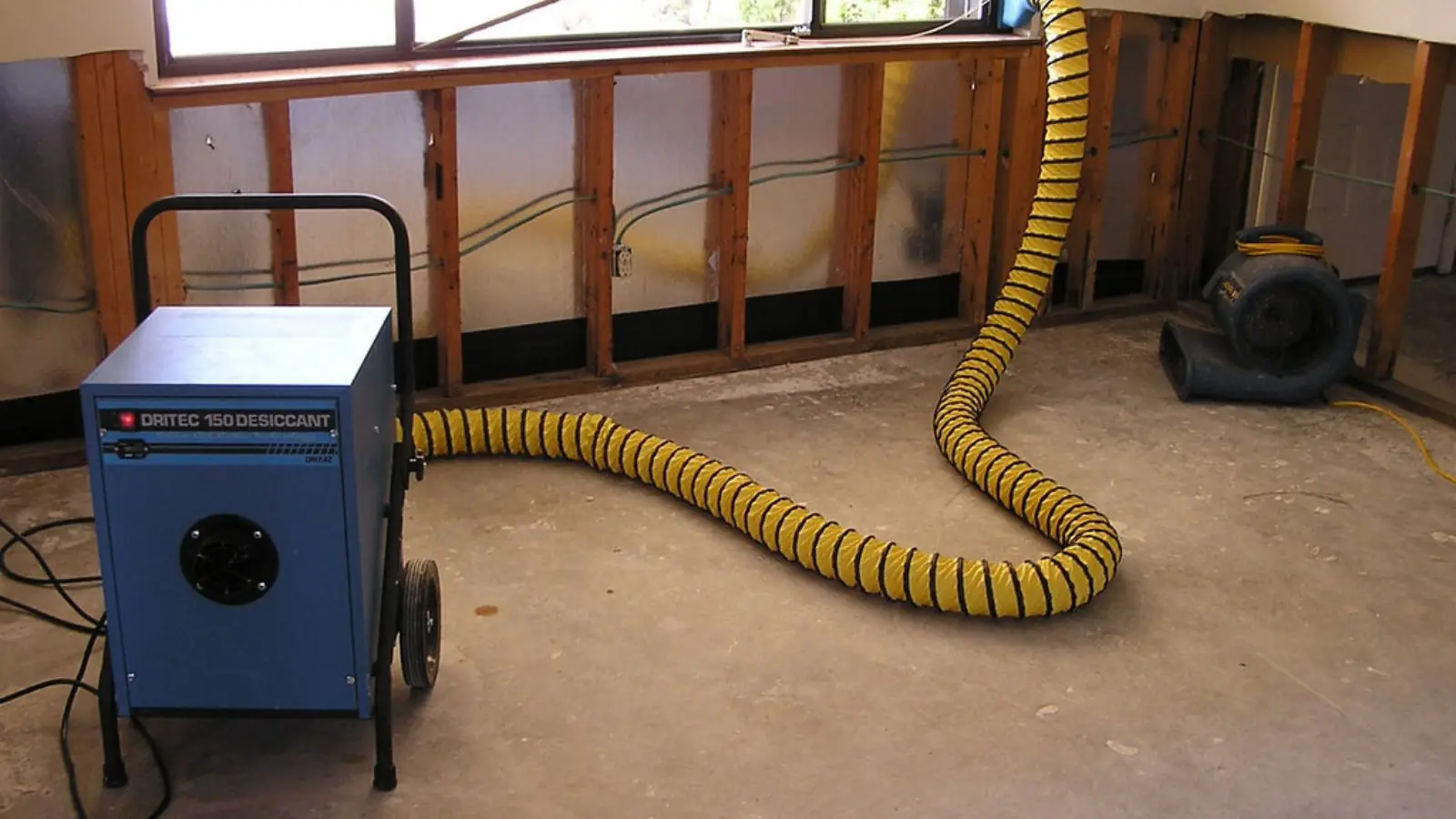
Structural drying removes moisture from framing, subfloor, slab edges and the cavity behind walls, which air alone cannot do. Crews use air movers to push dry air across wet surfaces and LGR dehumidifiers to pull moisture out of the air.
Moisture meters track each material daily against a drying goal. Thermal imaging cameras find cool, wet areas behind finished surfaces. When readings reach the goal, the equipment is removed, so drying runs are measured rather than guessed. The number of days depends on materials, humidity and how deeply the water went.
Hardwood, plaster, insulation and masonry dry at different speeds. Wall cavities are sometimes opened with small holes so air can reach the studs. This is one reason a surface that feels dry can still hold moisture.
- Moisture mapping of walls, floors and ceilings
- Air movers aimed at wet surfaces
- LGR dehumidifiers to lower humidity
- Daily meter readings against a dry standard
- Cavity drying through small openings when needed
Dry the structure before mold starts
Call the 24/7 line to set up drying today.
How a mitigation job runs
Stop the source
Isolate the leak or close the water supply.
Extract
Remove standing water with pumps or extraction units.
Map
Use meters and thermal imaging to find wet materials.
Dry
Place air movers and dehumidifiers, then check readings daily.
The method follows the ANSI/IICRC S500 standard for water damage restoration. Ask any company whether its crews work to it. If the water came from outside or from a drain, the flood damage restoration page covers the extra safety steps.
Equipment and how long drying takes
| Equipment | What it does |
|---|---|
| Air movers | Push air across wet surfaces to speed evaporation |
| LGR dehumidifiers | Pull moisture out of the air so drying keeps going |
| Moisture meters | Show whether wood, drywall and concrete are at dry readings |
| Thermal imaging camera | Shows cool, wet areas behind finished surfaces |
| HEPA air scrubbers | Clean the air when dust or mold is a concern |
Most residential drying runs for a few days, but the real time depends on the materials, the water category and the humidity. We do not rent drying equipment to homeowners, because placement and monitoring are the work.
What sets the price of mitigation
Price follows the water category, the area affected, the materials involved, the number of drying days and the amount of equipment, and any rebuild afterward. A clean water leak caught early is a smaller job than water that sat for days.
We explain scope and price before work starts, and the real number comes from seeing the damage. Call the 24/7 line to start. For insurance, sudden and accidental water damage is often covered while gradual leaks often are not. Check your policy and photograph the damage before drying begins.
Common questions
Do you handle water mitigation emergencies at night or on weekends in La Palma?
Yes. The dispatch line is open 24/7, including weekends and holidays, and you can start by stopping the source while a crew is arranged.
My wall feels damp but I cannot see water. Is that mitigation?
It can be. A damp wall usually means water is in the cavity. A meter reading tells whether the wall needs opening and drying.
How long does structural drying take?
Often several days, depending on materials, humidity and how deep the water went. Daily readings decide when it is finished.
Can I dry it myself with fans and a dehumidifier?
For a small clean spill, yes. For anything inside walls, under floors or from contaminated water, meters and professional equipment are needed.