
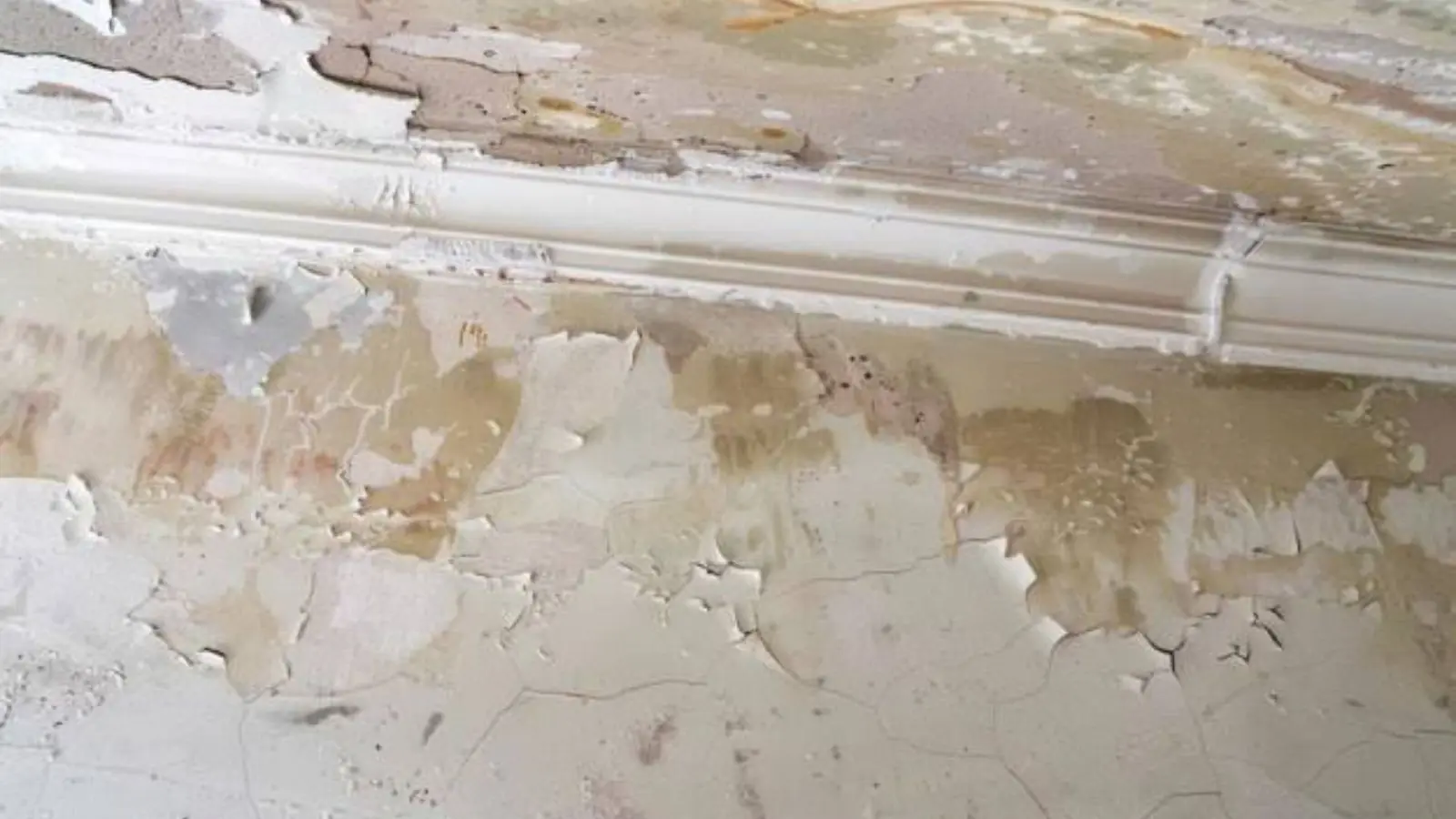
Drywall water damage repair in La Palma, CA starts with one question: is the gypsum panel still sound? Drywall is a chalky core wrapped in paper, and once water wicks in, that paper loses its grip. Some panels dry out fine. Others get cut out.
This guide walks through how an estimator sorts those cases. It covers moisture readings, where the cut line goes, what gets tested before the wall is closed, and the finishing steps that decide whether the patch vanishes under paint. The water source and its category matter more than how bad the stain looks.
How wet drywall actually fails
The paper facing is the weak point. It drinks water fast, swells, and then bubbles or stains. If the panel stays saturated, the gypsum core turns crumbly, and the joint compound at the seams usually softens first.
Time is the other factor. EPA guidance says damp materials dried within 24 to 48 hours generally will not grow mold. Past that window, the odds of hidden growth inside the wall cavity go up, and the plan shifts from drying to opening the wall.
- The panel is soft or crumbles when you press a screwdriver tip into it.
- The wall or ceiling sags or bows between studs.
- The paper facing is peeling away from the core.
- Tape lifts at the seams or the joints open up.
- A musty smell stays after the surface feels dry.
- Brown stains keep bleeding through fresh paint.
Moisture mapping comes before any cutting
A tech should not guess where the wet stops. A pin or pinless moisture meter gives numbers, and a thermal imaging camera shows cool, damp zones behind the paint. Readings are compared against a dry reference wall in the same house, since new construction and older plaster-era patches read differently.
Check both faces of the wall, the baseboard, and the bottom plate when you can reach it. Water travels down inside the cavity and sideways along the paper. A small ceiling stain can sit on top of a much larger wet area.
Damage level versus action
This table is a starting point, not a verdict. Water category and meter readings can move a wall from one row to the next.
| Damage level | What you see and measure | Usual action |
|---|---|---|
| Light, clean water, caught fast | Slight dampness, no staining, panel firm, readings only a little above dry reference | Dry in place with air movers and an LGR dehumidifier, then recheck readings |
| Moderate, clean water, a day or two old | Staining, firm panel, damp baseboard, higher readings low on the wall | Remove baseboard, drill small vent holes or lift the bottom edge, dry the cavity, replace only what stays soft |
| Heavy, panel soft or sagging | Crumbly core, peeling paper, bowed ceiling, open seams | Cut out and replace, sized to the last firm, dry stud bay |
| Gray water (appliance overflow) | Any visible wetting from a washer or dishwasher line | Cut out the wet porous layers, clean and treat framing, then rebuild |
| Sewage or flood water | Any contact with a backup or outside flooding | Remove the affected drywall and insulation, no drying in place |
Ceiling panels deserve extra caution. A ceiling holding water can fail without warning, so keep people and pets out of that room until someone has poked a small relief hole to drain it.
Water category changes the rules
ANSI/IICRC S500 is the published standard that sorts water into categories. Category 1 comes from a clean source, such as a broken supply line. Category 2 carries contamination, like a dishwasher overflow. Category 3 is grossly contaminated, such as sewage or flood water.
Ask any company whether its crews work to that standard. Porous materials like drywall and insulation are generally removed once water is Category 3, and often Category 2 as well. Drying them in place does not remove what soaked in. If you are unsure of the source, treat it as the higher category until someone proves otherwise.
Safety checks before you touch the wall
Turn off the circuit for any room with wet outlets or a wet ceiling fixture. Water in a wall can reach wiring you cannot see, so stay out of the room until an electrician or the crew has cleared it.
Older homes add one more caution. Ask before disturbing old ceiling texture, old joint compound, or old flooring, because materials from past decades can contain asbestos or lead. A lab test on a small sample costs far less than a contaminated house.
What gets tested before the wall is closed
Moisture content is the main test. The framing, bottom plate, and any retained drywall should read at or near the dry reference before anything new goes up. A good crew records daily readings, so the dry-out is documented and not just declared.
Mold testing is a separate call. If you see growth or smell it, the job may fall under ANSI/IICRC S520, and the wall should not be closed until that is handled. Lab sampling for asbestos or lead applies to older materials, and it happens before cutting, not after.
Cut, dry, hang, and finish
The order of work is what keeps a repair from failing later. Skipping the drying step is the most common reason patches stain again.
- Cut along stud centers so the new panel has something to fasten to.
- Pull wet insulation and set it aside for disposal.
- Run air movers and an LGR dehumidifier until the framing reads dry.
- Hang new panel, then embed paper or mesh tape in joint compound.
- Apply two or three thin coats, sanding between them.
- Prime with a stain-blocking primer, match the texture, and paint the whole wall corner to corner.
Painting only the patch almost always shows as a flat spot. Permit rules vary, so ask the city building department whether your scope needs one. Larger water damage repair jobs with structural framing often do.
La Palma notes for drywall repairs
La Palma shares a border with Buena Park, and the City of Buena Park runs its own water utility. That matters if a leak starts on the supply side before it reaches your meter. Check your water bill to see who serves your address, then call that provider about anything outside your property line.
State Route 91 splits Buena Park into North and South, so homes just across the line can be on different routes and different neighborhood layouts than yours. That is useful context if a neighbor's leak is the source. Crews also work in nearby Buena Park and Anaheim, so a shared wall or a source next door is not unfamiliar territory.
Your side of the fence is simpler. Stop the water, document the damage with photos, and start water mitigation before the 24 to 48 hour window closes. Then decide on repair.
Common questions
Can wet drywall be dried instead of replaced?
Yes, when the water was clean, the panel is still firm, and drying starts quickly. Meter readings decide, and the framing must dry too. Soft, sagging, or contaminated panels should come out.
How far above the water line should drywall be cut?
A common starting point is a couple of feet above the visible wet line, but the moisture meter decides. Water can wick higher inside the cavity than the stain shows. The cut should end on a stud at the last dry reading.
Do I need to repaint the whole wall after a patch?
Usually yes, from corner to corner. A painted patch shows as a flat or shiny spot because new paint never matches aged paint exactly. Prime the new compound first so it does not absorb paint unevenly.
I live near the Buena Park line in La Palma. Which water provider do I call for a leak in the street?
Check your water bill first. The City of La Palma has its own water utility, Golden State Water serves portions of La Palma, and Buena Park runs a separate city utility. Report street leaks to whichever provider is printed on your bill, and call your plumber for anything past the meter.
Still have a question about your situation? Call (714) 515-1308 and a dispatcher will talk it through, day or night.