
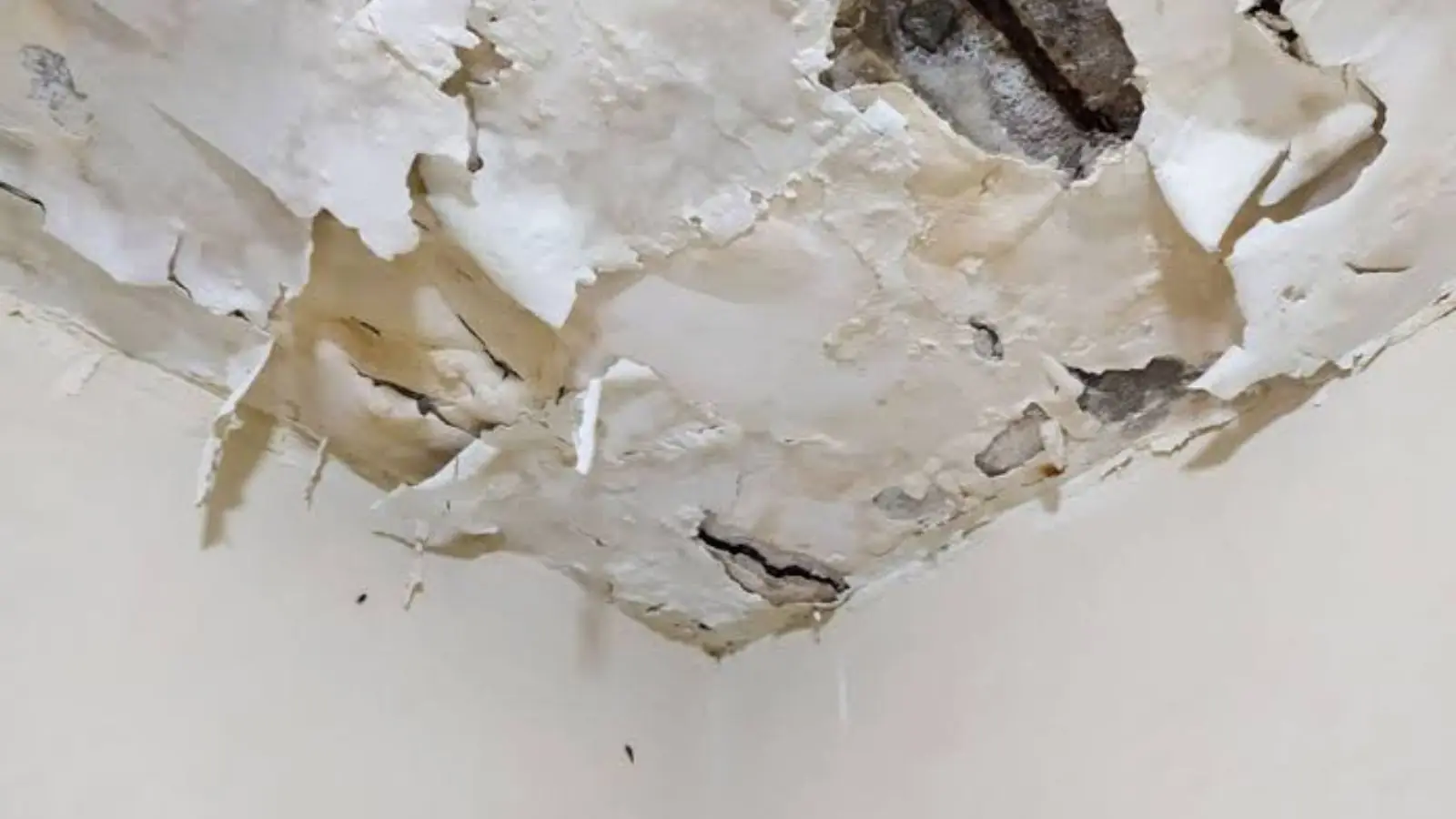
If you need to repair ceiling water damage in La Palma, CA, the order of the work matters more than the paint. A patch over wet drywall fails within weeks, so the first job is proving the ceiling is dry and the leak is fixed. This guide covers a small area, from a dinner plate up to a couple of square feet, that has already been dried and confirmed to be clean water.
Anything larger, still damp, sagging, or tied to sewage or an unknown source belongs with a crew. The steps below mark that line clearly, so you stop before a small patch turns into a bigger job.
Confirm the ceiling is ready before you cut or paint
Press a moisture meter against the stained spot, then against a clearly dry part of the same ceiling. The two readings should match. A stain that looks dry can still hold moisture above the drywall, in the insulation or along the joists.
EPA guidance says damp materials dried within 24 to 48 hours generally will not grow mold, so a leak that sat for days deserves a harder look. Check for a musty smell, soft drywall, or a stain that darkens on humid nights. If any of those show up, skip ahead to the last two sections and call.
Tools and materials worth having on hand
A small patch needs very little, but the right joint compound and primer make the difference between a repair that disappears and one that ghosts through the paint.
- Utility knife, drywall saw and a stud finder to locate framing
- Replacement drywall that matches the thickness of the ceiling, commonly half inch or five-eighths inch
- Setting-type joint compound, 6 inch and 12 inch taping knives, and paper or mesh tape
- Shellac-based or oil-based stain-blocking primer, plus ceiling paint
- Sanding sponge in fine grit, drop cloths, eye protection and an N95 mask
Step by step: patching a small ceiling area
Work in this order and let each coat dry fully before the next one. Rushing the compound is the most common reason a patch cracks later.
- 1. Turn off the breaker for the room and keep the ladder clear of any light fixture that got wet.
- 2. Cut out soft, stained or sagging drywall in a neat square, back to the center of the nearest joists.
- 3. Look at the cavity. Dry insulation can stay, but matted or stained insulation comes out.
- 4. Screw a scrap of wood across the opening if no framing is exposed, then fasten the new drywall piece to it.
- 5. Tape the seams, then apply a thin first coat of setting compound and let it harden.
- 6. Add a wider second coat, feathering the edges well past the seam, then a thin third coat.
- 7. Sand lightly, wipe off the dust, and prime the whole patch with stain-blocking primer.
- 8. Match the texture if the ceiling has one, then paint the entire ceiling plane edge to edge.
Why the stain keeps coming back through the paint
Water-soluble stains from tannins, rust and old nicotine bleed through ordinary latex paint. A stain-blocking primer locks them in, and two coats of paint on top finish the job.
Painting only the spot leaves a visible halo because new paint never matches aged paint. Cutting in along the walls and rolling the whole ceiling in one session hides the repair.
Where to stop and call a crew
Some findings change the job from a patch to restoration. Use this table as a quick check before you pick up a saw.
| What you see | What it usually means | Your move |
|---|---|---|
| Meter reads higher than a dry spot | Moisture is still trapped above the drywall | Stop, keep the area ventilated, and call for moisture mapping |
| Ceiling bulges or sags | Drywall is holding water and can fall | Keep people out of the room and call right away |
| Brown water with an odor | Possible sewage or long-term leak | Do not touch it, call for emergency water removal |
| Dark or fuzzy growth on the surface | Moisture has been present for a while | Fix the water source and call about mold remediation |
| Stain larger than a few square feet | Wider spread than the visible mark | Call for a full assessment |
Crews use thermal imaging cameras and moisture meters to map the wet area before any material is removed. If you are unsure, ask the company whether it works to the ANSI/IICRC S500 standard for water damage. Learn more about water damage repair and when mold remediation follows the S520 standard.
Older ceilings and electrical safety
Ask before disturbing old ceiling texture, especially popcorn texture or anything applied before the 1980s. Older materials can contain asbestos, and older paint can contain lead. A lab test comes before sanding or scraping, not after.
Water and wiring do not mix. If a fixture is wet, a ceiling fan wobbles, or you see scorching around a junction box, leave the power off and call an electrician. Keep children and pets out of the room until the work is done.
La Palma notes for a ceiling repair after a leak
Golden State Water serves Stanton and parts of La Palma, while the City of La Palma runs its own water utility for the rest. If a leak is still running, shut the house main valve first, then check a recent water bill to see which provider to call about the meter or a service-line problem. Knowing that before an emergency saves time.
Crews who work in Stanton see the same pattern of older single-story homes where a pipe leaks into a flat ceiling. If your neighbors across the city line share your provider, they can tell you where the shutoff sits. Homes in Cypress are also on Golden State Water, so the same bill check applies there.
Permit rules vary, so ask the city building department whether a patch needs anything beyond your own labor. A larger rebuild after water damage may. For La Palma, City Hall at 7822 Walker Street is where the Community Development department handles permits.
Common questions
How long should I wait before patching a stained ceiling?
Wait until a moisture meter reads the same as a dry part of the ceiling, which can take several days after the leak is fixed. Patching sooner traps moisture and invites the stain back. If you cannot get a reading, a day or two of ventilation is a minimum, not a guarantee.
Can I just paint over a water stain?
Only if the ceiling is dry and the source is fixed, and only after a stain-blocking primer. Ordinary paint lets brown rings show through within days. If the stain returns, there is probably still moisture above it.
Do I have to remove insulation above the patch?
Dry, clean fiberglass can often stay. Insulation that is matted, stained or smells off should come out, because it holds water and dries slowly. When the leak came from a drain line instead of a supply line, replace it.
In La Palma, who do I call to shut off water if my provider is Golden State Water?
Close the main valve at your house first, since that is yours to operate. Then check your water bill for the provider name and phone number, because the City of La Palma and Golden State Water each serve parts of town. Call that provider if the meter or the street-side line is leaking.
Still have a question about your situation? Call (714) 515-1308 and a dispatcher will talk it through, day or night.