
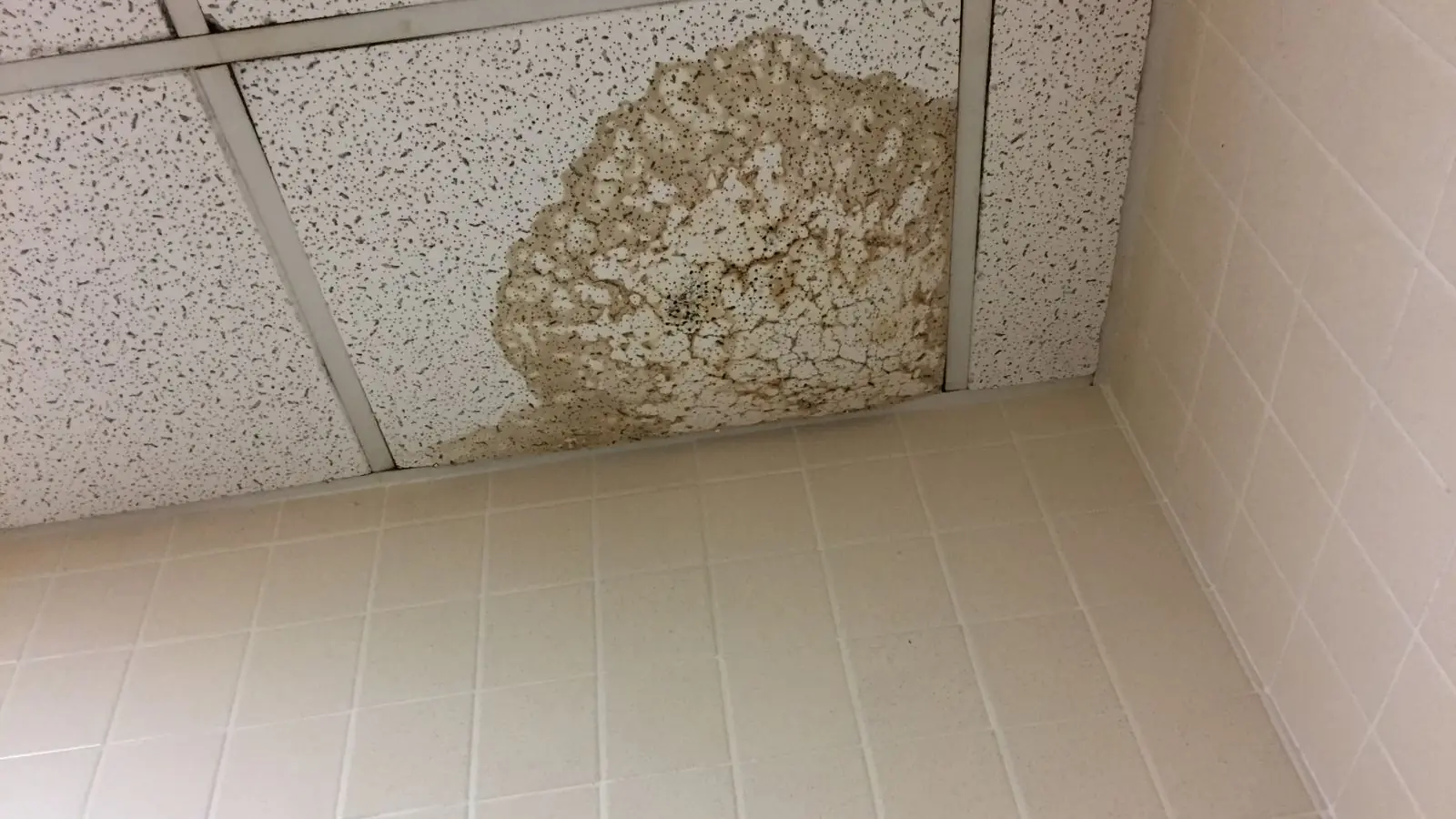
Minor ceiling water damage in La Palma, CA is easy to ignore. A faint tan ring, a hairline crack in the paint, a small bubble. Many of these are harmless one-time events, and some are the first sign of a slow leak.
The trick is knowing which kind you have. This guide gives you a short test, a decision table and the signs that mean the stain is no longer minor.
What counts as minor
A minor ceiling stain is small, flat and dry to the touch. It is roughly the size of a hand or smaller, the drywall is firm, and there is no sag, odor or dripping. The water came from a single event that has been stopped, like a one-time overflow or a brief drip from a condensate line.
If any of those conditions is missing, treat it as more than minor. A ceiling that feels cool, soft or damp is still holding water, no matter how small the mark looks.
The four-question test
Answer these honestly before deciding anything.
- Is the source found and fixed, not just dry for now?
- Is the drywall firm and flat, with no bulge, sag or soft spot?
- Does a moisture meter read the same here as on a dry part of the ceiling?
- Has the stain stayed the same size for at least a week?
Four yeses means the area is likely stable. Any no means keep investigating before you paint or ignore it.
Leave it, DIY it or call: a decision table
Use this as a guide, not a verdict. Your own readings come first.
| Situation | Reasonable choice | Why |
|---|---|---|
| Small dry stain, source fixed, meter normal | DIY primer and paint | Material is dry and the cause is gone |
| Stain grows or darkens over days | Call for assessment | A source is still active |
| Bubble or soft drywall | Call, do not poke | Water is trapped and the board is weakening |
| Stain under a bathroom or kitchen | Check plumbing, then decide | Fixtures leak in cycles |
| Musty smell with no visible stain | Call for moisture mapping | Hidden moisture is likely |
| Old ceiling texture will be disturbed | Ask before touching | Older materials can contain asbestos |
Why leaving it can cost you later
Drywall that stays damp can weaken, and insulation above it loses its value as it flattens. EPA guidance says damp materials dried within 24 to 48 hours generally will not grow mold. After that window, the odds change and the cost of waiting tends to rise.
A stain that sits unaddressed also hides new leaks. If the mark grows, you will not know whether the first source returned or a second one began. Circling the edge in pencil and writing the date gives you a record.
What a careful DIY fix looks like
Once the ceiling is confirmed dry, apply a stain-blocking primer over the mark and let it cure. Paint the full ceiling plane, since spot paint shows. If the drywall cracked, cut out the bad section and patch it with setting compound and tape.
Wear eye protection and a mask when sanding. Our guide to water damage repair covers when a patch is enough and when the ceiling should come down.
Keeping an eye on a stain you decide to leave
Trace the outline in pencil and write the date beside it. Check it after the next heavy shower use, the next rain and the next humid week. Press gently on the center with a flat hand to feel for softness, and photograph it from the same spot each time.
A stable stain after a month is a good sign. A stain that grows, even slightly, means the source is still active, and it should be found before anything is painted. Quick checks cost nothing and catch the problems that matter.
Do not sand, scrape or break open old textured ceilings
Older popcorn and spray textures can contain asbestos, and paint from earlier decades can contain lead. Disturbing either one releases dust that is hard to clean. Ask before disturbing old ceiling texture, and have a sample tested by a lab before any scraping or sanding begins.
This is one of the clearest reasons a small job stops being a DIY job. A patch on a smooth, newer ceiling is very different from one on an unknown textured surface.
Signs you should stop and call
A sag, a drip, dark or fuzzy growth, a sour smell or a stain larger than your hand all change the plan. So does any wetness near a light fixture. In those cases, shut off power to the room and keep people away from the area.
A crew can use a moisture meter and a thermal imaging camera to see how far the water went. If mold is present, mold remediation follows the S520 standard, and your doctor handles any health question. Call (714) 515-1308 if you want help sorting it out.
La Palma notes on tap water and small leaks
The Santa Ana River recharges the Orange County Water District groundwater aquifer, and that groundwater is part of what flows to La Palma taps. When a supply line leaks into a ceiling, the water is clean at first, which restoration crews call Category 1. That is why a quick-caught supply leak is often a good candidate for drying in place.
The clean label does not last. After roughly 48 hours, water that has soaked through dust, insulation and old drywall can degrade, and a leak from a drain line is never Category 1 to begin with. Use the four-question test above, and treat a long-sitting leak as more than minor even if the source was a supply pipe.
If your supply-line leak reaches a neighbor's unit, such as in a duplex or townhouse, talk to them early. Homes in Cypress and Cerritos face the same choices, and shared walls mean shared moisture.
Common questions
Can I ignore a small ceiling stain if it is dry?
If the source is fixed, the meter reads normal, and the stain has not changed in a week, ignoring it is low risk. Still, seal it with stain-blocking primer, since tannins keep bleeding through plain paint.
Why did my stain turn dark after I thought it dried?
Dark rings often appear when moisture returns, such as on a humid day or after another leak. Check the attic or the fixture above before painting. A dark patch that grows needs a moisture reading.
Does bleach fix mold on a ceiling stain?
Bleach is not recommended as a fix. Mold needs moisture, so the water source comes first, and small areas can be handled using EPA guidance for small areas. Larger or recurring growth needs professional remediation.
In La Palma, is a leak from a supply line really clean water?
At first, yes. Tap water here draws on Orange County Water District groundwater, which the Santa Ana River helps recharge, and a fresh supply leak is Category 1. After about two days it can become contaminated as it moves through building materials.
Still have a question about your situation? Call (714) 515-1308 and a dispatcher will talk it through, day or night.