
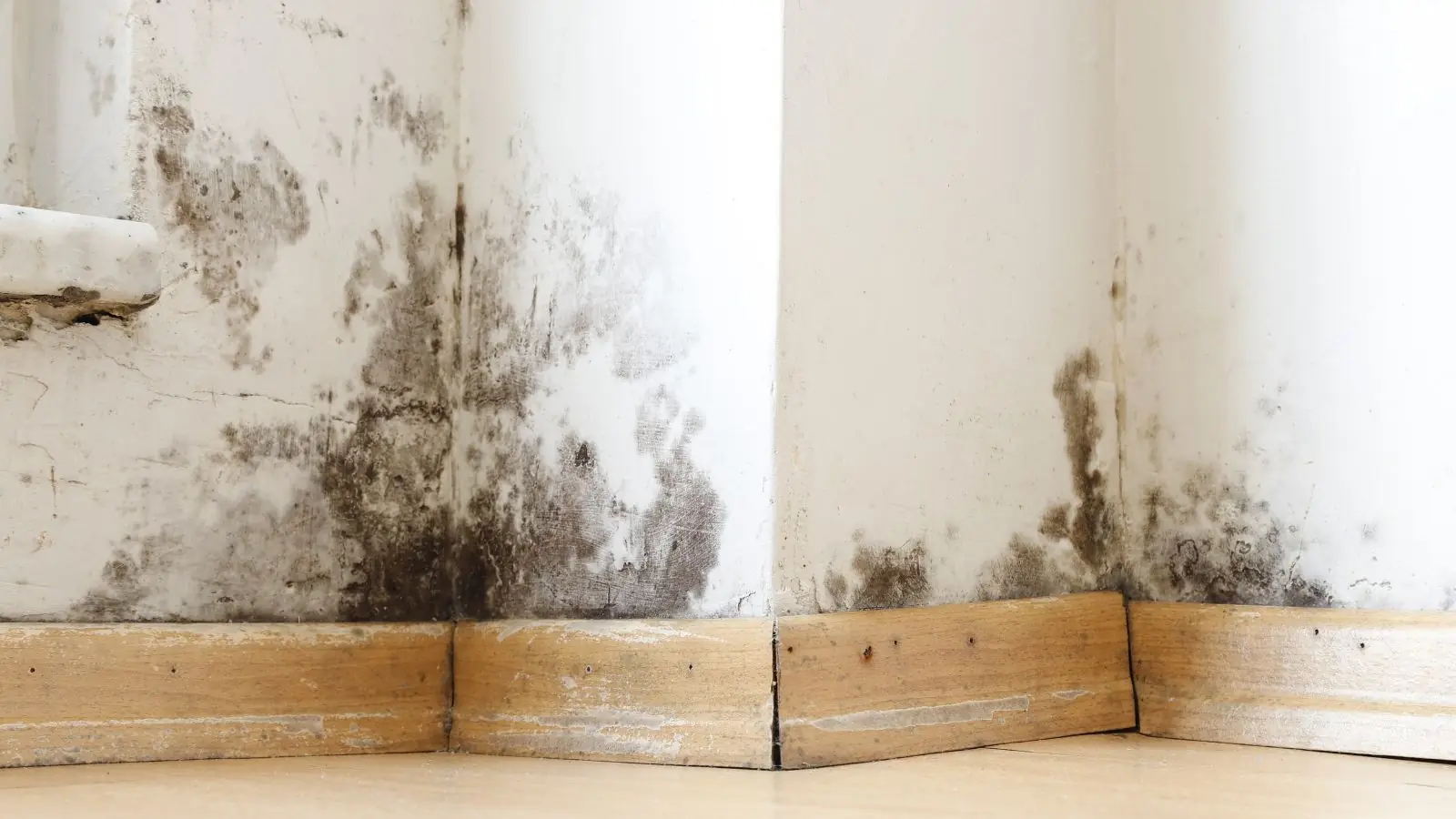
Mold on walls in La Palma, CA is almost always a moisture story. The stain you see is the end of a chain that began with a leak, a cold surface, or trapped humidity. Cleaning the surface without finding that chain is why growth returns.
This article covers how growth behaves on drywall, paint, and wallpaper, why furniture against a wall invites trouble, what exterior wall condensation looks like, and how to trace the water. It is practical guidance, not a diagnosis, and health questions belong with a physician.
Reading what the wall is telling you
Patterns point to causes. A ring of staining under a window suggests condensation or a leaking frame. Growth in an upper corner suggests a cold exterior wall meeting warm indoor air. A stain that follows a vertical line from floor to ceiling often traces a pipe inside the wall.
Color and fuzziness are poor guides. Growth looks black, green, white, or gray depending on age. What matters is whether the area is damp, spreading, or coming back.
Drywall, paint, and wallpaper behave differently
Drywall is the most vulnerable. Its paper face is food for mold, and once the paper is damp for long, growth can sit behind the paint. Painted drywall with a surface stain may have much more behind it.
Wallpaper is the other trap. It holds moisture against the wall, and the paste is itself a food source. Peeling seams, bubbles, or a musty smell behind wallpaper deserve a meter reading before you strip anything. Paint can seal in moisture for a while, but it cannot stop a wall that keeps getting wet.
Behind furniture and in closets
Furniture pushed flush to an outside wall blocks air movement, and the wall behind stays cooler than the room. Moist indoor air condenses on that cold surface. Over weeks, a dark patch forms where nobody looks.
Pull large pieces a few inches off exterior walls and leave closet doors cracked open or louvered. Check behind headboards, bookshelves, and dressers. A hygrometer that reads indoor humidity helps, and keeping it moderate is a simple habit.
Exterior wall condensation
Cold exterior walls collect condensation when warm, humid air touches them. Common drivers are showers without a working exhaust fan, laundry drying indoors, cooking without a vented hood, and gaps in insulation. Corners and spots near window frames are classic.
Thermal imaging cameras show cold spots in insulation that you cannot see by eye. If the pattern repeats each season, the fix is ventilation and insulation, not cleaner.
Finding the moisture source
Work from simple to complex. Many mold calls end with a plumbing visit, a roof or flashing repair, or a bathroom fan that finally gets vented outside.
- Check under sinks, behind toilets, and around the washing machine hoses.
- Look at ceilings and walls below bathrooms and upstairs plumbing.
- Inspect window frames, door thresholds, and exterior caulk.
- Run a moisture meter along the wall in a grid and note the highest readings.
- Use a thermal imaging camera to trace cool, damp zones.
- Ask a plumber to pressure test lines if readings stay high with no visible source.
A source that is found and fixed is worth more than any cleaning product. Water mitigation covers the drying side, and mold work follows only after the wall is dry.
Small patches versus larger problems
EPA guidance treats areas under about 10 square feet as a size many homeowners can handle, if the cause is fixed and the surface is hard. A mildewed painted wall with a dry cause can be cleaned with detergent, water, and gloves. Porous drywall with growth usually has to be cut out.
Above that size, or with growth inside a wall, plan on a professional. Crews use containment, HEPA air scrubbers, and ANSI/IICRC S520, the published standard for mold remediation. Ask whether your state licenses mold work, and do not rely on bleach.
Questions to ask before you hire
Ask what moisture readings will be taken and when. Ask where containment will be set up and how the air will be filtered. Ask what happens to removed drywall and how the dry-out will be verified before rebuilding.
Request a written scope that names the area, the method, and the finish work. A vague scope makes bids hard to compare, and it leaves room for surprise add-ons after demolition starts.
After the cleanup
Once the wall is dry and growth is removed, rebuild with new drywall, primer, and paint. Keep records of readings and photos. If the home is being sold, an independent clearance test can document the result.
Watch the spot over the next few months. If staining or smell returns, moisture is still present, and the search for the source resumes.
Keep indoor humidity moderate, run bathroom and kitchen exhaust fans to the outdoors, and fix small drips right away. A cheap hygrometer on the wall costs little and shows trends before a stain does. Seasonal checks of window corners and the wall behind large furniture catch repeat problems early.
La Palma notes from Cerritos next door
Cerritos sits across the line in Los Angeles County, while La Palma is in Orange County. That means different county agencies and different city offices for permits. If your wall problem involves a property near the border, confirm which city and county you are in before calling anyone.
Cerritos began as Dairy Valley, with more than 400 dairies at incorporation, and its water comes from the City of Cerritos Water Utility. La Palma's water comes from the City of La Palma utility or Golden State Water, depending on your address. A leak inside a wall still starts at the meter, so look at your bill to know whom to call.
Crews also work in Cerritos and neighboring Buena Park. For a stubborn wall, mold remediation follows the same sequence in each city.
Common questions
Is mold on a wall always a leak?
No. Condensation, poor ventilation, and cold exterior walls can cause it without any leak. A moisture meter and a look at the pattern tell you which.
Can I paint over mold on drywall?
Painting does not fix it. The moisture stays and growth can continue behind the paint. Dry the wall, remove affected drywall, and then prime and paint.
Should I remove wallpaper if I see mold behind it?
Take a meter reading first and avoid dry scraping. If growth is under the paper, the drywall behind it often has to come out too. Stop and call if the area is larger than about 10 square feet.
Does it matter that Cerritos is in Los Angeles County and La Palma is not?
It can. County and city offices differ, so ask the city building department in your own city about permits. Your water bill tells you which utility to call about supply issues.
Still have a question about your situation? Call (714) 515-1308 and a dispatcher will talk it through, day or night.