
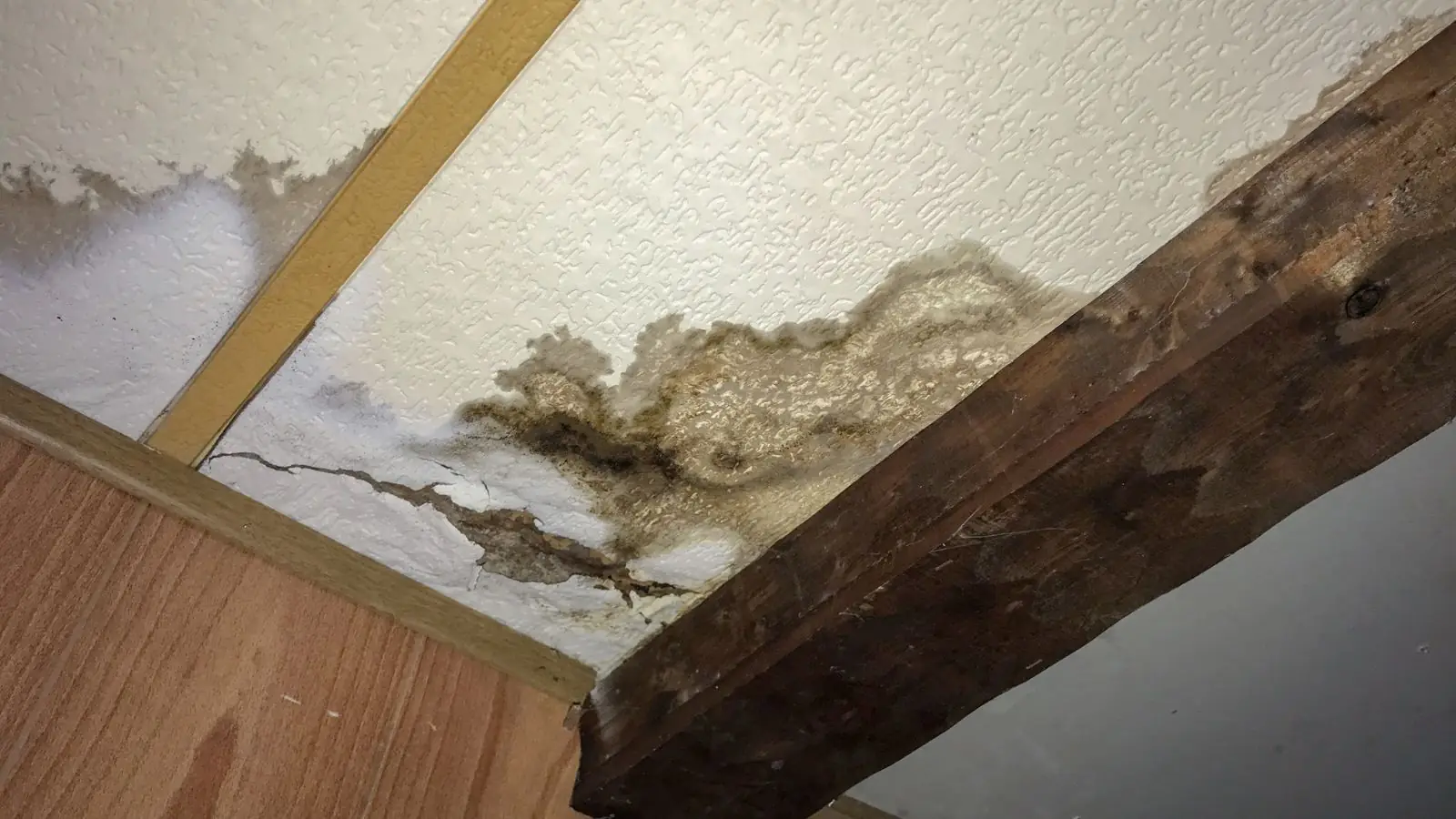
To repair ceiling water damage after an upstairs leak in La Palma, CA, you first have to deal with everything the water touched on its way down. The ceiling you see is the last layer in a stack that includes the flooring, subfloor, joist cavity and insulation. Skipping any step leaves hidden moisture behind.
This post walks through the sequence a restoration crew follows, from stopping the water to rebuilding the ceiling. Knowing the order helps you judge a plan and spot shortcuts.
Safety steps: stop the source and make the room safe
Shut off the water to the fixture or the whole house, then switch off the breaker for the affected rooms. Water that reaches recessed lights or a ceiling fan is an electrical hazard. Keep people and pets out of the room below.
If the ceiling bulges, do not stand under it. Drywall holding water is heavy and can collapse. A crew can release it in a controlled way and capture the water.
Water removal comes before any rebuild
Standing water on the upstairs floor and in the room below needs to be extracted first. Extraction units pull water from carpet and pad faster than towels ever could. This is where emergency water removal fits, since early action limits what soaks into framing.
Under the S500 standard, the type of water matters. A burst supply line is clean, but a toilet overflow, a dishwasher drain or an aquarium leak is not. Contaminated materials usually have to be removed instead of dried.
Moisture mapping: finding the real wet area
A moisture meter reads moisture in drywall, wood and subfloor, and a thermal imaging camera shows cooler wet zones behind paint. Together they let a technician draw the boundary of the damage on the ceiling and walls. The mapped line is usually larger than the stain.
Readings are repeated during drying and recorded each visit. The goal is to match the readings of an unaffected area, not to guess when it feels dry.
What happens to insulation and drywall
Each material gets its own dry-or-replace decision. This table shows the common outcomes, though the final call depends on readings and water category.
| Material | Clean water, caught early | Contaminated or long-soaked |
|---|---|---|
| Fiberglass batt insulation | Often dried in place or removed and reinstalled | Removed and discarded |
| Blown cellulose | Often removed because it holds water | Removed and discarded |
| Drywall | May dry in place if firm and flat | Cut out past the wet line |
| Plaster or textured ceilings | Tested before disturbing | Removed with containment |
| Subfloor and joists | Dried with air movers and dehumidifiers | Cleaned or replaced as needed |
Drywall is generally cut back a few inches past the last wet reading, ideally to a joist so the new piece has a place to fasten. Ask before disturbing old texture or older flooring above, since asbestos or lead can be present.
Drying before repair, and the mold link
Air movers and LGR dehumidifiers run until readings reach the dry standard. Sealing wet cavities too early traps moisture where you cannot see it. Opening the ceiling usually dries things faster than leaving it closed.
EPA guidance says damp materials dried within 24 to 48 hours generally will not grow mold. Past that window, growth becomes a concern. If it appears, mold remediation follows the S520 standard with containment and HEPA air scrubbers, health questions belong to a physician, and independent clearance testing exists.
Checking the floor above and the walls
Water seldom stays in one spot. It runs along joists, down wall cavities and under baseboards, so the upstairs floor and the walls of the room below get readings too. Carpet, pad, hardwood and laminate each react differently, and pad is usually discarded when it is soaked.
Thermal imaging cameras help here because they show cooler wet zones through paint and flooring without cutting anything open. A crew can then limit demolition to the places that need it. That keeps the rebuild smaller and the house quieter during drying.
Questions to ask before work starts
Ask who will record moisture readings and how often. Ask which materials will be removed and why, what the dry standard is, and what the rebuild includes. A clear written scope protects you more than any promise made over the phone.
Ask also whether the company works to ANSI/IICRC S500, and whether mold clearance testing would be done independently if growth is found. These are fair questions and any reputable company will answer them.
Rebuilding the ceiling
Once the framing and cavity are dry and confirmed, new insulation goes in, followed by drywall, tape, compound, primer, texture and paint. Matching a textured ceiling takes practice, so crews often blend the texture beyond the repair. Painting the full ceiling hides the seam.
Our water damage repair and water mitigation pages explain how drying and rebuilding connect. If your policy might apply, check it and ask your insurer what documentation they want. Call (714) 515-1308 for an on-site assessment.
La Palma notes: your utilities depend on your address
Anaheim Public Utilities is the only municipal water and electric utility in Orange County, so utilities differ by address across the area. In La Palma, the City runs a water utility and Golden State Water serves parts of town. Check your own bill to know who to call, rather than assuming your neighbor's provider is yours.
That matters during an upstairs leak because you need the right shutoff and the right contact quickly. Close the main valve at the house, then call the provider on your bill if the meter or the street line is involved. Your electric provider is a separate question, and the bill answers that as well.
Crews also work in Anaheim and Buena Park, where the City of Buena Park runs its own water utility. If you rent, tell your landlord about the leak right away and keep photos of the damage.
Common questions
How long does drying take after an upstairs leak?
A few days is common for clean-water leaks, but thick insulation, subfloors and multi-room damage can take longer. The crew keeps drying until moisture readings match a dry reference area, not until the calendar says so.
Do I have to open the ceiling if it looks fine?
Not always. A moisture meter and thermal imaging camera can show whether the cavity is wet. If it is, opening a small section lets air reach the framing and speeds up drying.
Can the downstairs neighbor or my landlord be involved?
Yes, in multi-unit buildings the leak source and the damaged ceiling often belong to different people. Report it right away, take photos, and check your policy. Ask your insurer how shared-wall claims work.
In La Palma, how do I know which utility to call after an upstairs leak?
Look at your water bill. The City of La Palma and Golden State Water each serve parts of town, and utilities differ by address across Orange County, including Anaheim's municipal water and electric service. Your bill names the right provider.
Still have a question about your situation? Call (714) 515-1308 and a dispatcher will talk it through, day or night.