
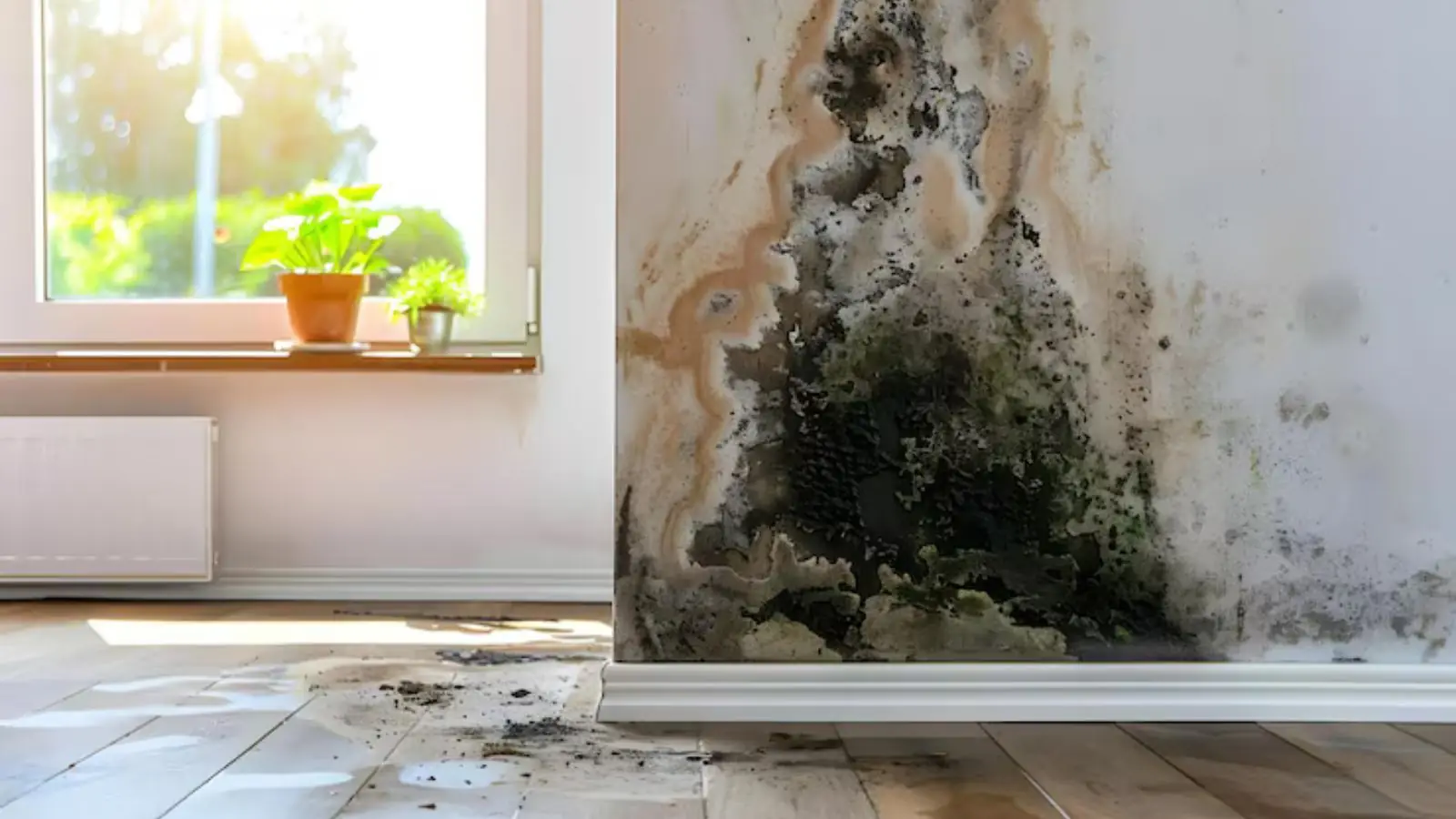
If you are asking what black mold is in La Palma, CA, the short answer is that the name describes a look, not a confirmed organism. Plenty of molds appear dark green, gray, brown, or black on drywall, grout, and wood. The color alone does not tell you what you are looking at.
This guide covers what a visual check can and cannot tell you, how testing works, why moisture is the real issue, and what to do next. It stays on the practical side. Questions about how mold affects any person belong with a physician.
Why a color cannot confirm a species
Mold colonies change color as they grow and as they age. The same species can look white, green, or black depending on food source, moisture, and light. Different species can also look nearly identical to the eye.
Because of that, a photo or a quick glance cannot name the mold. Only laboratory analysis of a sample can identify genus, and even then the result describes that sample on that day. Treat any dark growth as something to deal with, regardless of what the label says.
What mold needs to grow
Mold needs moisture, an organic food source, and time. Drywall paper, wood, ceiling tile, carpet backing, and dust all qualify as food. Moisture is the only item you can realistically control.
EPA guidance says damp materials dried within 24 to 48 hours generally will not grow mold. That is why a leak found and dried quickly matters more than any product sprayed on afterward. If a surface stays wet longer, growth becomes likely.
Where dark growth usually shows up
Look where moisture lingers. Typical spots are listed here, along with the moisture problem that often sits behind each one.
- Under sinks, where a slow supply or drain leak keeps the cabinet floor damp.
- On exterior walls and window corners, where condensation collects.
- Around bathroom ceilings and exhaust fans that do not vent outside.
- Behind furniture pushed tight to a cold wall.
- On the underside of subfloors above a damp crawlspace.
- Inside walls after a pipe leak, often visible only as a stain or smell.
Hidden growth is common after plumbing leaks. A moisture meter and a thermal imaging camera can show damp zones behind a wall without cutting into it.
How testing works and what it tells you
Air sampling collects spores from the room and from outdoors for comparison. Surface sampling, using tape lifts or swabs, shows what is on a specific spot. Both go to a lab, and a good report lists counts and types, not a verdict on danger.
Testing is most useful for specific questions, such as whether growth hides in a place you cannot see. It is a weak tool for simply asking whether the black stuff is a dangerous mold, because the answer would not change the work. Whoever tests should be independent of whoever does the remediation, so the results are not self-graded.
What to do when you find it
Fix the water first. If a pipe is leaking, a roof is dripping, or an exterior wall keeps sweating, cleaning the mold only buys you a short reprieve. Turn off the source, then dry the area with fans and a dehumidifier.
Do not scrub or brush dry growth, because it spreads dust around the home. Do not paint over it, and do not rely on bleach as a solution. Close the door to the room, keep the HVAC from pulling air through it, and take photos with dates for your records.
Myths that waste time and money
One myth says a dark color means a worse problem. Color varies with age and food source, so a pale patch can be as serious as a black one. Another says a spray-on product ends the job, but nothing sprayed on a wet wall fixes the wetness.
A third myth treats a clean air test as proof that nothing is hidden. Air results vary with the day, the doors, and the weather, which is why a sampler also looks at moisture readings and the building. Use test results as one input and not as the whole answer. A written report with sampling locations, dates, and lab methods is worth keeping.
Where a professional gets involved
EPA guidance treats areas smaller than about 10 square feet as a size many homeowners can handle with care. Larger areas, repeat growth, or growth tied to sewage or flood water are different. In those cases, a crew sets up containment with plastic sheeting, uses negative air with HEPA air scrubbers, removes affected materials, and follows ANSI/IICRC S520, the published standard for mold remediation.
Ask any company whether its crews work to that standard. Ask whether your state licenses mold work, and ask the company to explain what it will do for mold remediation before it begins. If the moisture came from a pipe or appliance, the dry-out is a separate job called water mitigation.
La Palma notes on dark mold, with Stanton in mind
Stanton covers 3.10 square miles, and about half of its housing units are renter-occupied. That means many Stanton residents do not control repairs on the place they live. If you rent, tell the landlord about dark growth or a leak in writing, include dated photos, and keep a copy.
A written notice creates a record and starts the clock for repairs. Ask whether your state licenses mold work before anyone hires a contractor on your behalf, and ask the landlord who will handle the dry-out.
La Palma has a mix too, with 68% of its 5,270 housing units owner-occupied and 32% renter-occupied. That means roughly one in three households here may be in the same position as renters in Stanton. Our crews also work in nearby Cypress, where the same steps apply.
Common questions
Can I tell by looking whether it is black mold?
No. Color does not identify a species, and one species can show several colors. Medical questions belong with a physician. The practical response to any dark growth is the same, which is to fix the moisture and remove it safely.
Can I test it with a home kit?
A kit can show that spores exist, which they do almost everywhere. It will not tell you how much is a problem or where it started. A professional assessment with meter readings and lab sampling gives more useful answers.
Will painting over it work?
No. Paint sits on top of growth and the moisture beneath it keeps going. The material underneath has to be dried and cleaned or removed, depending on how porous it is.
I rent in La Palma. What should I do if I find dark growth?
Tell your landlord in writing, with dated photos, as soon as you see it. Ask who will fix the water source and when. If the response stalls, ask the city building department what options exist.
Still have a question about your situation? Call (714) 515-1308 and a dispatcher will talk it through, day or night.