
Water damage restoration is the process of stopping water, removing it, drying the structure and repairing what could not be saved. A homeowner in La Palma, CA may only meet the process after a pipe bursts or an appliance fails. Knowing the steps helps you judge what a crew is doing and why.
The industry reference is ANSI/IICRC S500, a published standard for water damage restoration. You do not need to read it, but you can ask any company whether its crews work to it.
The steps from start to finish
| Step | What happens | Tools |
|---|---|---|
| 1. Safety and shutoff | Stop the source, check electrical hazards, keep people and pets away | Water shutoff, circuit breaker, safety gear |
| 2. Assessment | Find the water category and map the wet area | Moisture meters, thermal imaging cameras |
| 3. Extraction | Remove standing water from floors and surfaces | Pumps, truck-mounted or portable extraction units |
| 4. Removal of unsalvageable materials | Take out wet carpet pad, insulation or drywall | Hand tools, bagging, containment |
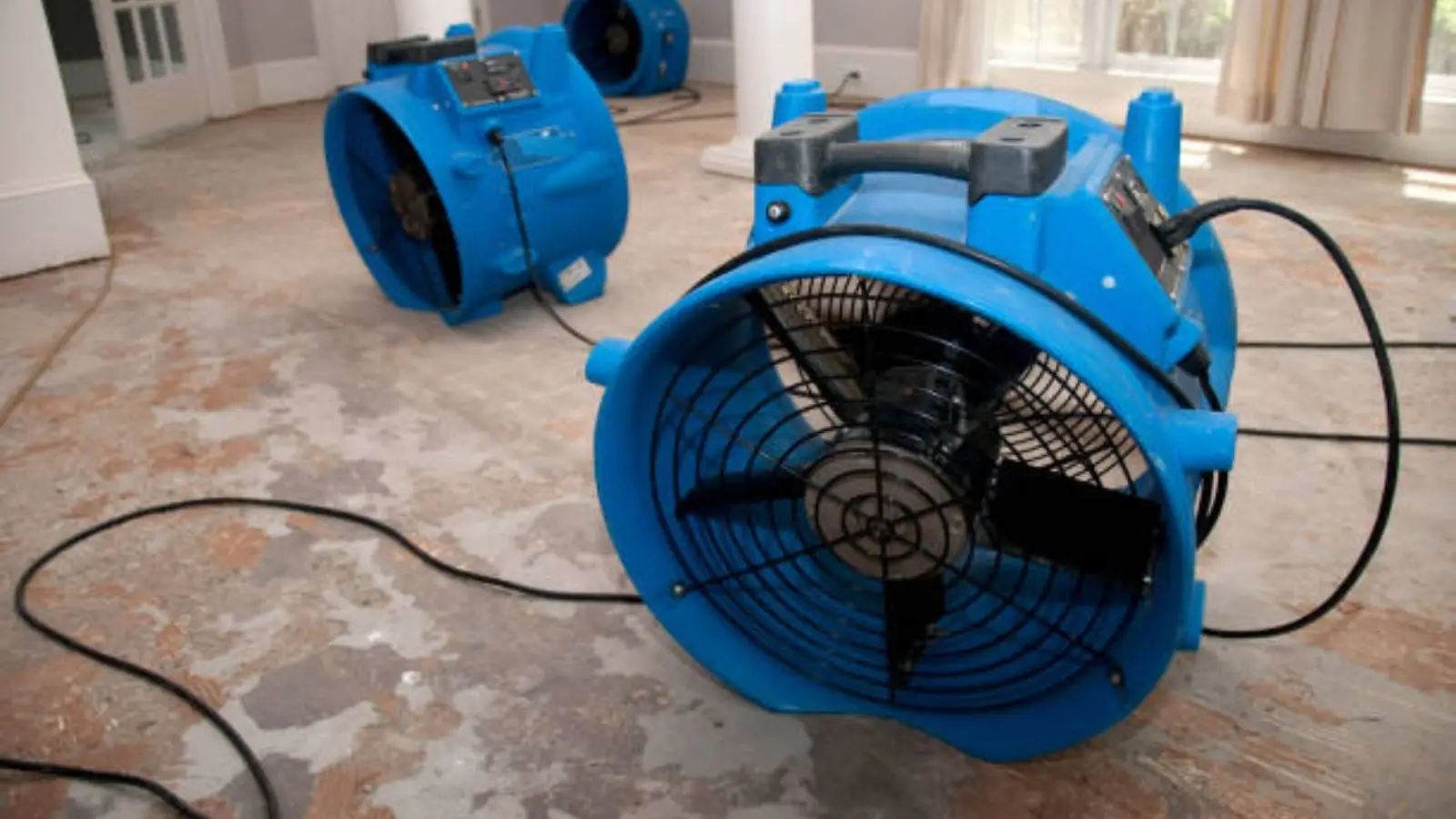
| 5. Drying | Move air and pull moisture out of the structure | Air movers, LGR dehumidifiers |
| 6. Cleaning and treatment | Clean surfaces and contents | Detergents, antimicrobial products as labeled, HEPA vacuums |
| 7. Monitoring | Take readings until materials reach dry standards | Moisture meters, written logs |
| 8. Repair | Rebuild what was removed | Drywall, paint, flooring |
Water categories 1 to 3
Category 1 water comes from a clean source, such as a supply line or a sink overflow. Category 2 contains contaminants that can cause illness, such as washing machine discharge. Category 3 is grossly contaminated, such as sewage or river flood water.
Clean water can degrade as it sits, so a Category 1 loss can become Category 2 after a day or two. Category 3 usually means porous materials such as carpet, pad and insulation are removed rather than dried.
A restoration crew classifies the water at the start and again if conditions change.
Your insurer and your crew should both know which category applies, since it drives the scope.
Categories at a glance
| Category | Typical source | Usual handling |
|---|---|---|
| Category 1 | Supply line, sink overflow, tub overflow | Extract and dry. Act within a day or two before it degrades |
| Category 2 | Washing machine or dishwasher discharge, aquarium | Extract, remove porous items, clean and dry |
| Category 3 | Sewage, rising flood water, long-standing water | Remove porous materials, clean thoroughly, dry, protective gear required |
How drying actually works
Drying is a controlled exchange. Air movers push dry air across wet surfaces, and LGR dehumidifiers pull the moisture out of the air so it can absorb more. Closing the space helps the equipment work.
Crews take daily moisture readings and adjust the equipment layout. Drying is done when materials meet the dry goal on a meter, not when the surface feels dry. EPA guidance says damp materials dried within 24 to 48 hours generally will not grow mold.
Fans alone leave moisture trapped in wall cavities and under flooring, so the equipment plan matters more than the number of machines.
Temperature and humidity are logged each visit, so the crew can show that conditions inside the drying space are improving.
What you can do before the crew arrives
Safe, simple actions make a difference.
- Shut off the water at the main or the fixture valve.
- Turn off power to wet areas at the breaker if you can do so safely. Never stand in water to reach a panel.
- Move small items, rugs and furniture legs out of the water.
- Photograph the damage before moving anything.
- Open windows for airflow if the weather allows, but leave heavy drying to equipment.
- Do not use a household vacuum on wet floors.
- Keep a written timeline of when the water started and what you shut off.
Related services and where they fit
Each loss type has its own page. Emergency water removal covers the first hours when water is actively standing, while flood damage restoration covers larger events with contaminated water. Water damage repair is the rebuild step after drying is confirmed.
Ask before disturbing old ceiling texture or old flooring, since older materials can contain asbestos or lead. A crew should stop and test before removal if there is doubt.
Photographs taken at the start, during and at the end of the job give you a record of what was removed and why.
Rebuild covers insulation, drywall, paint and flooring once readings show dry. Ask the city building department whether your repair needs a permit.
Questions worth asking any company
Ask who will be on site and how often readings are taken. Ask for a written scope, a moisture log and a description of what equipment will run. Ask whether they work to ANSI/IICRC S500 and what the dry goal is.
Be wary of anyone who promises to skip documentation or says a wet wall will dry on its own. If insurance is involved, keep every log, since adjusters often request them.
Finally, ask what is included in the price and what is billed as rebuild, since drying and repair are often written as separate scopes.
A good crew will also explain which materials were removed and which were kept, so you can match the invoice to the work.
La Palma notes on a small city next to big neighbors
La Palma covers 1.8 square miles, which makes it the smallest city in Orange County by area. Buena Park, Cypress and Cerritos border it. Because the city is so compact, you can reach a neighbor's address in a few minutes of driving, and a crew that serves one town often serves the others.
The practical tie-back is that the company you choose may be working across several of these cities on a busy day. Ask what equipment and staff are available for your job and how readings will be recorded. Do not rely on a vague promise of speed.
Nearby Cerritos and Stanton follow the same drying standards. Keep your own photos and logs no matter which crew handles the work.
Common questions
How long does water damage restoration take?
Drying commonly takes several days and depends on the materials, the water category and the equipment on site. Rebuild comes after drying is confirmed with a meter. A written plan with daily readings tells you more than a single time estimate.
Can I dry the house myself with fans?
Fans move air, but they do not remove moisture from the structure. Wet framing and subfloor can stay damp behind a dry surface. Moisture meters and dehumidifiers are what confirm progress.
What if the water came from a sewer backup?
That is Category 3 water. Keep people and pets away, and have porous materials such as carpet, pad and drywall removed by a trained crew. Do not try to clean it with household supplies.
Why does the size of La Palma matter when hiring?
A small city means neighboring towns are close, so more companies serve the area. Compare scope documents and equipment plans rather than choosing by distance alone. Ask about the readings and the dry goal.
Still have a question about your situation? Call (714) 515-1308 and a dispatcher will talk it through, day or night.